Why a Wide Shot Can Make a Room Feel Empty
Learn how to read a wide shot, track the space around its subject and see how framing, distance and room details create a feeling of isolation.
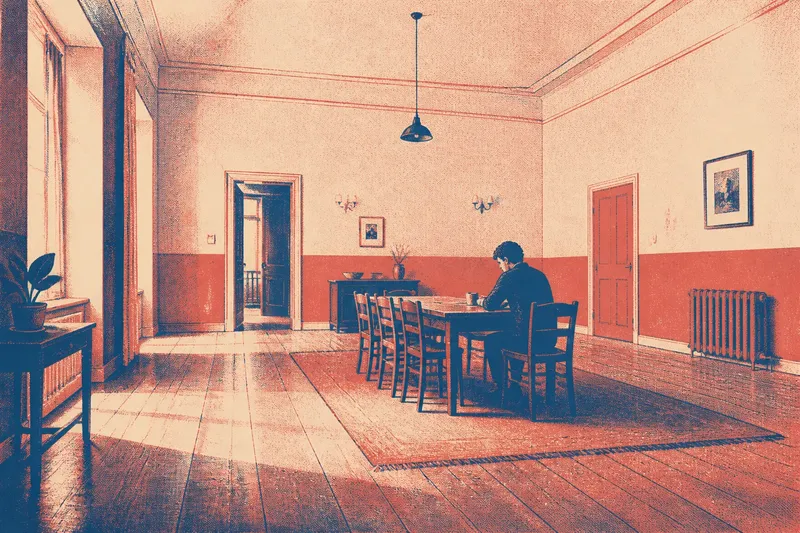
The common mistake when reading a wide shot is to look only at the person in it. That can hide the image’s real pressure: the visible room may make the subject seem distant, exposed or overlooked, even when the room is occupied. To understand why a wide shot can make a room feel empty, start with the space the frame chooses to keep.
Begin with the edges of the frame
Pause on a wide shot and trace its boundaries before deciding what the scene feels like. Notice how much of the floor, ceiling and walls remains visible, and whether the subject sits near an edge or in the middle. The frame is not simply showing a location; it is deciding how much of that location competes with the person.
Look for space that seems to serve no immediate action. An empty stretch of carpet between a character and a doorway, or a broad wall behind a seated figure, may make the room feel larger than the character can comfortably occupy. If the visible space has a clear purpose, such as showing where someone can move, it may read as practical geography rather than emotional distance.
Then check what the frame excludes. A room may contain other people just outside the image, or the camera may omit a busy adjoining area. A wide shot can therefore feel empty without showing an entirely vacant room: the composition can isolate its subject by limiting what shares the frame.
Measure distance by the subject’s place in the room
Next, compare the subject’s apparent size with the room’s visible features. A person reduced to a small figure beneath a high ceiling can seem less powerful or less connected to the setting. The effect depends on the relationship, not on any single architectural feature: a high ceiling around a group gathered closely may feel communal, while the same ceiling above one motionless person may feel imposing.
Notice whether the camera appears to stand with the subject or observe from across the room. A distant viewpoint can make the viewer feel like a visitor, a watcher or someone unable to reach the character. A closer position within a wide composition may preserve plenty of surrounding space while still placing the viewer among the action.
Imagine a scene in which a character sits at one end of a long kitchen table while the camera stays near the doorway. If the person remains small against the table and the open floor, you might read the room as an obstacle between viewer and subject. If the frame instead moves closer to the table, the same room could feel like a familiar place that happens to be quiet. The observable difference is where your attention settles: on the character’s face and gesture, or on the stretch of room separating you from them.
Follow how the room directs attention
Once you have located the subject, see what else the composition asks you to notice. Strong lines can guide your eye towards a person, but they can also lead past them: a corridor may draw attention to an empty doorway beyond a seated figure. Bright windows, patterned floors and large furniture can make the human figure seem secondary even when the scene is about that person.
Ask whether the room offers competing points of interest. A cluttered office can still feel lonely if the clutter forms a visual barrier around a character or leaves them stranded in a clear patch. Conversely, a spare room can feel calm rather than empty if its simple arrangement brings the viewer’s attention directly to a person’s small, readable action.
Watch for negative space: the unoccupied area around or between subjects. A large gap between two people can make a conversation feel emotionally restrained, while the same pair standing close together against a broad wall may seem connected despite the room’s scale. The gap is not a fixed symbol; its meaning comes from posture, gaze, placement and what the scene has made you expect.
Compare the room’s details with the person
Look at the room as a collection of visual cues rather than a single backdrop. A set of unused chairs can suggest that a gathering has dispersed; a neatly made bed can make a figure’s stillness feel exposed; a half-open door can make the room seem less settled. These objects matter when their placement or condition draws attention, not simply because they are present.
Check scale and repetition. A row of similar doors or windows can make a person look swallowed by a system of repeated shapes. A single distinctive lamp beside a character may instead give the eye a small point of intimacy. Ask whether the details make the room feel inhabited, abandoned, orderly, watchful or impersonal, and whether that impression supports the subject’s position in the frame.
Also notice whether the room’s surfaces separate the character from the viewer. A glass partition, a deep shadow or a foreground object can create a sense of distance even when the camera is not especially far away. In that case, the feeling of emptiness comes partly from restricted access to the person, not merely from vacant floor area.
Track movement without leaving the composition behind
Now follow what changes while the shot holds. A character crossing a large room may appear to take a long time to reach a door, which can make the space feel difficult to traverse. If the camera stays still as the person moves away, the room may seem to reclaim the frame once the figure has gone. A camera that follows closely can keep the person visually present, softening that impression even if the room remains wide.
Pay attention to pauses and entrances. A person who stops in the middle of a room may look stranded; someone who enters and immediately draws another person’s gaze can make the space feel socially occupied. If the camera shifts to reveal a new part of the room, ask whether the reveal gives the subject somewhere to go or merely extends the emptiness.
It is not worth treating every empty corner as a hidden symbol. Sometimes a wide frame simply makes an action legible or shows where people are standing. Look for a pattern across framing, placement and movement before assigning an emotional meaning to one patch of floor.
What should you ask about a wide shot?
Does a wide shot always make a character seem lonely?
No. A wide shot can make a group feel united, show a busy environment or give a character room to move. Isolation is more likely when the composition separates one person from others or makes the surrounding space visually dominant.
What is the difference between a wide shot and an empty-looking shot?
A wide shot includes substantial surroundings, while an empty-looking shot gives those surroundings more visual weight than the people in them. A crowded room can still feel empty if the subject seems disconnected from everyone else or lost in the composition.
How can I tell whether a room is meant to feel isolating?
Look for several cues working together: a small or marginal figure, a gap between people, obstructed sightlines, or movement that leaves the character alone in the frame. Treat these as clues rather than proof, and compare them with the scene’s action and the character’s behaviour.
Can a closer view still make a room feel empty?
Yes. A closer composition can include a large bare wall or place the subject behind glass, keeping the room’s emotional distance even as the face becomes easier to see. The viewer may feel close to the person’s expression but shut out from their surroundings.
Use a short viewing sequence to make your reading precise
On a rewatch, work through the shot in order rather than jumping straight to an interpretation:
Pause on the full frame and identify the subject, the visible boundaries of the room and the largest unoccupied areas.
Locate the subject within the composition: note their size, position and distance from other people or important objects.
Trace where your eye goes first and next. Check whether lines, light, colour or repeated shapes direct attention towards the person or away from them.
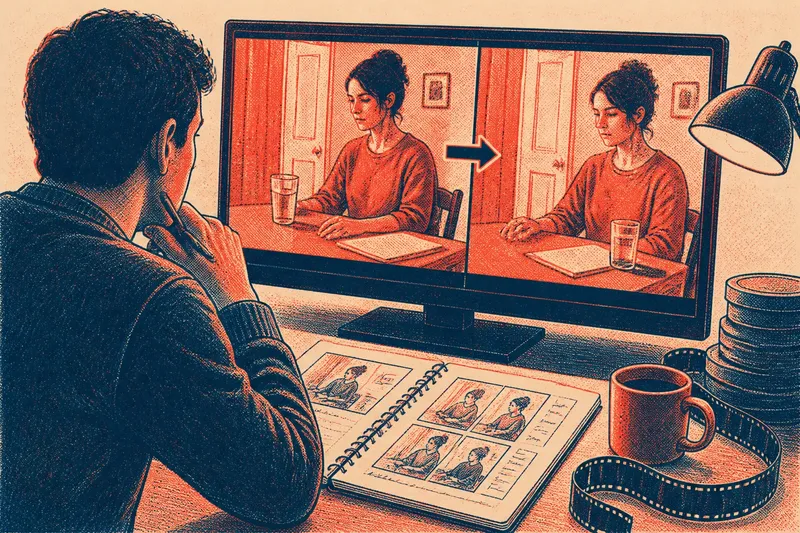
Watch the shot play and follow any movement by the subject or camera. Notice whether motion connects the character to the room or leaves them behind in it.
State the effect in concrete terms, such as “the doorway stays distant while the figure remains small”, before choosing words like lonely or tense.
This sequence keeps your interpretation tied to what the image actually shows. It also helps distinguish a feeling created by composition from one suggested by the story’s dialogue or events.
Read space as a relationship, not a verdict
Why a wide shot can make a room feel empty comes down to relationships: person to frame, figure to furniture, one body to another, and movement to available space. A vacant room is only one possibility. A room full of objects can feel emotionally bare, while a large, spare space can feel welcoming if the subject appears at ease within it.
When you watch the next wide shot, describe the visible arrangement before naming its mood. Notice who has room, who is separated, and where the image sends your attention. That simple pause can reveal how the room is shaping the story without a character needing to explain what the space feels like.